
Easy camp kitchen recipes for Australian trips come down to a few reliable patterns: one-pot meals that simmer while you set up, no-cook breakfasts that chill in the esky overnight, and damper or flatbread cooked in the coals when fires are allowed. NSW National Parks suggests repacking spices into small containers, pre-cooking meals where you can, and freezing water bottles to keep food cold. [1] Below are recipes drawn from Australian parks services and camp organisations, plus the gear that makes them practical on a touring setup.
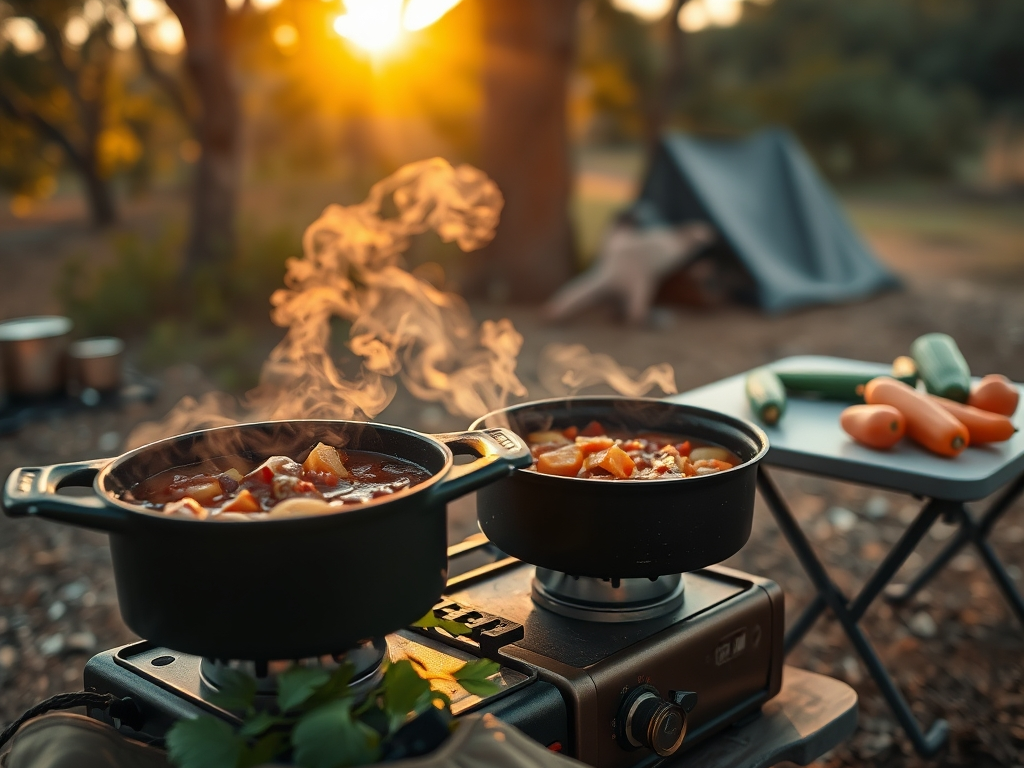
What you need before you cook at camp
The constraint that shapes every camp meal is fuel and time. Because carrying large amounts of cooking fuel is difficult, campers often need meals that cook in roughly 5–20 minutes, and many prefer a just-add-boiling-water approach. [2] The alternative is a slow pot over coals, which only works where fires are permitted.
Shelf-stable food is the backbone. Camping meals commonly rely on foods that are freeze-dried, dehydrated, pre-cooked or preserved in other ways so they stay usable for long periods; campers might carry fresh items for a day or two but tend not to keep perishables longer than that. [2] Freeze-dried ingredients rehydrate faster at camp and retain more flavour than dehydrated ones, while dehydration can cut food weight by 60 to 90 percent by removing water through evaporation. [2]
Practical prep, according to NSW National Parks:
- Transfer seasonings into compact stackable tubs, and carry oil and sauces in small reusable silicone bottles. [1]
- Cook meals in advance when possible to cut down on time and washing up at camp. [1]
- Freeze water bottles to keep food cold, then defrost them for drinking and cooking water. [1]
Environment SA adds a meat trick for longer trips: dice and freeze meat in portions before you leave, and freeze it in a large clump rather than flat so it defrosts more slowly, doubling as an ice block in the esky. [3]
One number worth knowing if you’re hiking rather than driving: backpackers require an average of 2000 kJ (480 calories) per hour, plus higher sodium levels. [2]
Three easy camp kitchen recipes to master first
1. Damper. Bring flour, long-life milk and salt and you have the base for damper — knead the dough into a lump and cook it. For a sweet version, combine the mixture with water and add chopped apple and cinnamon, or banana and nutmeg, with a little brown sugar to taste; for savoury, add cheese and bacon or sweetcorn. [3]
2. Overnight oats. Mix rolled oats, dried berries, chia seeds and coconut flakes with milk (or water and milk powder), put it in small containers and chill in the esky overnight. It can also be made at home for an even smoother trip. [1]
**3. Camp oven stew. Put split peas, pearl barley, canned tomatoes, potatoes, onions and your preferred meat into the camp oven with chopped fresh produce, then let it cook gently for one to two hours and watch it closely toward the end. If you’re using plenty of split peas and pearl barley, add ample water. [3]
Turn any leftover stew into soup by adding extra water, one or two more cans of tomatoes and additional split peas; add pumpkin if you want it thicker. [3]
Top 5 camping meals for Australian trips
- Damper, sweet or savoury, cooked in or beside the coals. [3]
- Camp oven stew, the one-pot meal that suits a long, slow afternoon back at camp. [3]
- Baked vegetables: bring potatoes, pumpkin, sweet potato and foil, smear each vegetable with oil and sea salt, and drop them into the coals; finish with butter, or use leftover cheese and bacon as a filling. [3]
- Breakfast burritos: prepare the filling the evening before, put it in tortillas, wrap each in two layers of oiled foil and freeze; when camping, warm them on a grill or fire for about 20 minutes until hot all the way through. [1]
- Oatmeal pancakes: combine oats, yoghurt and milk and set aside for 15–20 minutes to soften, blend oats to a flour, then beat in egg and oil and add sugar, salt, cinnamon, bi-carb soda and the flours, cooking roughly ¼ cup of batter per pancake on a lightly oiled griddle and turning once. [4]
For dessert, orange peel brownies work without a pan: halve six oranges and spoon out the contents without piercing the skin, mix a standard brownie batter (transport the dry ingredients in a zip-lock bag), fill the skins, double wrap in foil and cook cut-side up on the campfire or in a covered pot for 20–25 minutes. [1] Environment SA’s chocolate fudge self-saucing pudding uses self-raising flour, salt, sugar, cocoa, milk and melted butter for the pudding, with brown sugar, cocoa and very hot water mixed separately and poured over before cooking on the coals — watch it closely or you’ll end up with a sticky toffee pudding. [3]
Sandwich kebabs are the no-cook option for lunch: butter and crust bread, cut into pieces, then thread with ham or turkey, tasty cheese, cherry tomatoes and cucumber. [4]
Fire bans, fuel and cooking safety
Before you fire up the BBQ or camping stove, check the NSW National Parks alerts list for any fire bans. [1] Campfires are only permitted in some parks and in designated fire rings, and you’ll need to bring your own firewood to most campgrounds. [1] Campfires are banned in many national parks either year-round or for part of the year, so check the rules for the park you plan to visit before you go. [3] Because a burn ban may be in place, campers don’t often rely on cooking over a fire. [2]
Common mistakes that waste food and fuel
- Carrying perishables too long. Fresh food is usually eaten in the first day or two rather than risked later in the trip. [2]
- Skimping on water with legumes. Split peas and pearl barley need ample water in a stew. [3]
- Not scaling a recipe. The bacon chops pan recipe serves one, so upscale the ingredients if you’re feeding more people. [4]
- Overcooking a self-saucing pudding, which turns it into sticky toffee. [3]
- Assuming a fire will be allowed, when bans can be in place at short notice. [2][1]
Camp kitchen gear: two setups to compare
A stable, packable cooking surface matters more than fancy cookware when you’re cooking the recipes above in wind and dust. Two Australian options:
| Brand | What they offer | Worth knowing |
|---|---|---|
| Kings | A 700mm modular kitchen drawer with a slide-out table and cutlery drawer, a fold-out bench with support leg, heavy duty ball bearing slides and an integrated bottle opener. [5] | The cutlery drawer and table can be configured on the left or right, the main compartment is sized for a Kings single gas cooker, and dividers are included; it’s compatible with all Kings drawers and drawer accessories and carries a 30 Day Change of Mind Guarantee with conditions applying. [5] |
| Darche | A tables collection described as durable, sturdy and reliable, plus a cooking range of barbeques and grills, tableware including plates, cutlery and bowls, and bags and storage for organising the camp kitchen. [6] | The tables are pitched as camp furniture for your next adventure rather than as part of a modular drawer system, so plan how the table, cooking gear and tableware pack together in the vehicle. [6] |
Which option fits whom
Choose a drawer-based kitchen if you’re building out the rear of a 4WD or a canopy and want the stove, cutlery and a prep surface to slide out together from one unit, with the option to mount the table on either side. [5]
Choose a standalone table plus separate cooking gear if you already own a stove or BBQ and want a surface you can move around camp — near the fire, under the awning, or beside the swag — rather than a fixture bolted into the vehicle. [6]
Cooking mostly no-cook meals like overnight oats and sandwich kebabs? A table and a small prep surface do the job, and the budget is better spent on your esky and cold storage. [1][4]
Cooking camp oven stews and baked vegetables on trips where fires are allowed, you’ll want a stable surface for chopping and a pot that can take coals, rather than a lot of drawer hardware. [3]
Both brands are listed on their own sites; check the current range, specifications and whether they deliver to your location directly with the brand before you plan your build.
Whichever route you take, the recipes above scale from a single swag to a family campsite — and confirming fire rules, water supplies and cold storage before you leave is what keeps the cooking easy once you’re out there.
Sources
- Nine camping recipes to try if you’ve already mastered the classics | NSW National — blog.nationalparks.nsw.gov.au
- Camping food (Wikipedia) — Wikipedia
- 5 simple but tasty campfire cooking recipes — environment.sa.gov.au
- 6 camping recipes kids will love | Camp Quality — campquality.org.au
- Kings official site — au.adventurekings.com
- Darche official site — darche.com.au
How we put this together: we compared these options using each brand's published product and policy pages and the references listed above. We haven't tested the products ourselves, and details such as prices and policies can change, so check the brand's site before you buy.