
A DC-DC battery charger takes power from your vehicle’s 12V electrical system and converts it to the voltage and current your camping battery needs, so the auxiliary battery charges while you drive. A converter acts like the alternator in that it supplies the 12V system with power and charges the 12V battery [1]. Both sides work in direct current, the form batteries store and deliver [2], which is what separates it from a mains charger fed by 240V alternating current.
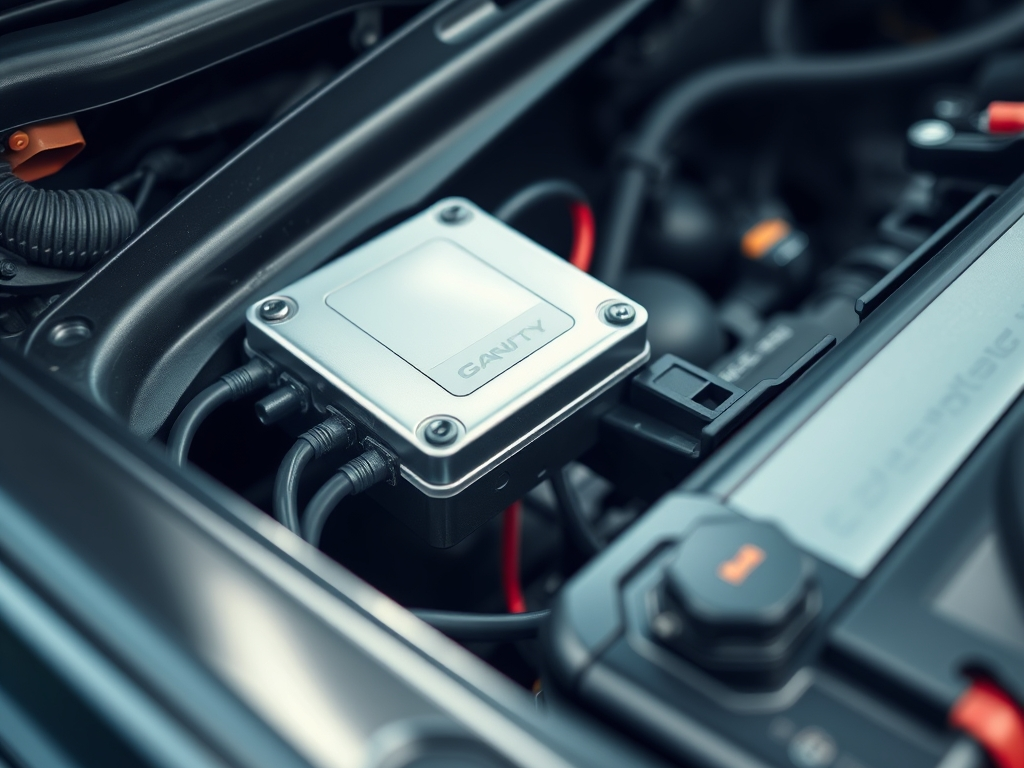
What does a DC-DC charger do?
Victron says the charger is for dual-battery systems in vehicles or on boats, where the alternator and the start battery are used to charge the service battery [3]. That is the whole point of a dual battery setup — the cranking battery stays charged enough to start the car, while the auxiliary battery takes the load of the camping gear.
The charger does more than pass current through. Victron describes its Orion-Tr Smart as an adaptive 3-stage charger, meaning the charging profile changes as the battery fills rather than pushing one fixed voltage the whole time [3]. That is what lets a single unit look after a deeply drained battery on the first hour of a drive and then ease off once it is close to full.
This matters most when the vehicle is doing short hops or sitting still. The Victorian Seekers Club points out that running a fridge in the car makes electrical power an issue, and that with a simpler dual-battery isolator you need to run the engine long enough each day to keep the second battery topped up — and recharging a deep cycle battery can take quite a while [4].
How does DC-DC charging work?
Inside the unit, direct current in is converted to a different direct current out. One explanation of the process describes taking DC in, inverting it to alternating current, reducing the voltage through induction, then inverting it back to DC at the lower voltage [1]. Converters can produce any DC voltage supply needed, which is why the same class of device can feed a 12V system or a 24V one [1].
Because the output is set by the charger rather than by whatever the alternator happens to be doing, the charger can hold a proper charging voltage even when the input sags. Victron’s unit is built for 12V or 24V systems and handles both lead acid and lithium batteries, with models up to 400W and the option of running several units in parallel to raise output [3].
Heat is the other design factor. That same charger is rated for high temperatures up to 55°C, with full rated output up to 40°C [3] — worth reading closely if the unit will live in an engine bay or a tray canopy in summer.
Why not just use a dual-battery isolator?
An isolator is a switch: it connects the two batteries when the engine is running and disconnects them when it stops. It relies on the alternator’s own voltage to do the charging, which is fine in an older vehicle with a fixed-voltage alternator.
The Victorian Seekers Club notes that on many newer vehicles the alternator’s voltage varies and is managed by the ECU or by temperature, making it unsuitable for charging a second battery [4]. When the alternator deliberately drops its voltage for fuel and emissions reasons, an isolator has nothing extra to give — the auxiliary battery sees a low voltage and charges slowly, if at all.
A DC-DC charger solves that by taking whatever voltage arrives and converting it to a charging voltage — converters can produce any DC voltage supply needed [1]. It also keeps the two batteries electrically separated in a way a plain relay does not, so a flat auxiliary battery does not drag down the cranking battery.
Lithium, lead acid and non-isolated designs
Battery chemistry changes what the charger has to do. Victron states its Orion-Tr Smart is suitable for both lead acid and lithium batteries [3]; check any model’s stated compatibility before pairing it with an expensive lithium pack, because the charge profile that suits a lead acid battery is not the same one a lithium battery wants.
“Non-isolated” appears in the model name of that Victron unit [3]. The term describes the internal arrangement: in a non-isolated converter the input and output share a common electrical path, while an isolated design separates them. Non-isolated units are the common choice for vehicle dual-battery work; isolated versions exist for situations where the two sides must not share a ground.
If you want one box that also accepts a solar panel, check the inputs on the specific model — a solar input is not universal across DC-DC chargers, and it changes how you wire the system.
Does a DC-DC charger replace solar?
No. A DC-DC charger only charges while the engine is running, so its usefulness depends on how much you drive. The Victorian Seekers Club notes that highway travel suits alternator charging, but sitting in one spot for several days does not, and describes a roof-mounted solar panel as a better approach for outback prospectors [4].
In practice the two work as a pair: driving days top the battery up through the charger, and stationary days lean on solar. If the vehicle is parked up and the fridge is running off the car, the club’s advice is to run the engine every couple of days to keep the car battery charged [4].
DC-DC chargers compared
| Brand | What they offer | Worth knowing |
|---|---|---|
| Renogy | A dedicated DC-to-DC battery charger collection listed for RV, van and off-grid systems. [5] | The same site carries solar panels, lithium iron phosphate batteries and inverters, so charger listings sit inside a full system catalogue. [5] |
| Victron | The Orion-Tr Smart Non-Isolated: an adaptive 3-stage DC-DC charger with built-in Bluetooth, for 12V or 24V systems and lead acid or lithium batteries. [3] | Models run up to 400W, can be paralleled for more output, and are rated to 55°C with full output up to 40°C. [3] |
| Kings | A DC charger category within its solar and batteries range, listing 46 products. [6] | The category mixes single chargers with “Bundle N Save” listings, so check exactly what is in each bundle before comparing. [6] |
| Dometic | A DC-DC section inside its power and solar battery charger category. [7] | It sits within the brand’s broader power and solar range rather than as a standalone category. [7] |
Which option fits whom
If you want to watch and change charging behaviour from your phone, Victron’s unit is monitored and programmed via Bluetooth and can be switched remotely [3].
If you are assembling a whole 12V kit — panels, battery and charger — from one catalogue, Renogy’s charger collection sits alongside its batteries and panels [5].
If you want a long list of chargers and bundled deals to work through in one place, Kings lists 46 products in its DC charger category [6].
If you are already reading through Dometic’s power and solar range for other 12V gear, its DC-DC section is the matching starting point [7].
Whichever way you go, match the charger’s output current to your battery’s capacity and chemistry, allow for cable length between the start battery and the charger, and confirm current specifications and availability in your region on the brand’s own site before ordering.
Sources
- HYBRID POWER ELECTRONICS: DC-DC CONVERTERS – VASA — vasa.org.au
- Electric vehicle charging equipment | energy.gov.au — energy.gov.au
- Victron official site — victronenergy.com
- Camping – The Victorian Seekers Club Inc — victorianseekersclub.org.au
- Renogy official site — renogy.com
- Kings official site — au.adventurekings.com
- Dometic official site — dometic.com
How we put this together: we compared these options using each brand's published product and policy pages and the references listed above. We haven't tested the products ourselves, and details such as prices and policies can change, so check the brand's site before you buy.
You may also find What is a Swag? Australian Camping Swags Explained useful.